Why SCADA Online Monitoring Is Essential for Real-Time Industrial Control?
SCADA online monitoring isn’t just about watching machines on a screen. It establishes continuous operational awareness across systems that cannot tolerate delays and blind spots. Therefore real-time monitoring ensures operators understand system behavior as it happens, not after performance has already degraded. This visibility reduces uncertainty during every condition.
What is SCADA online monitoring?
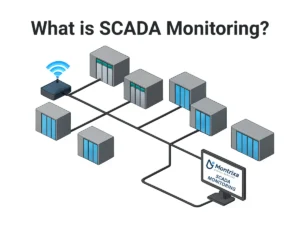
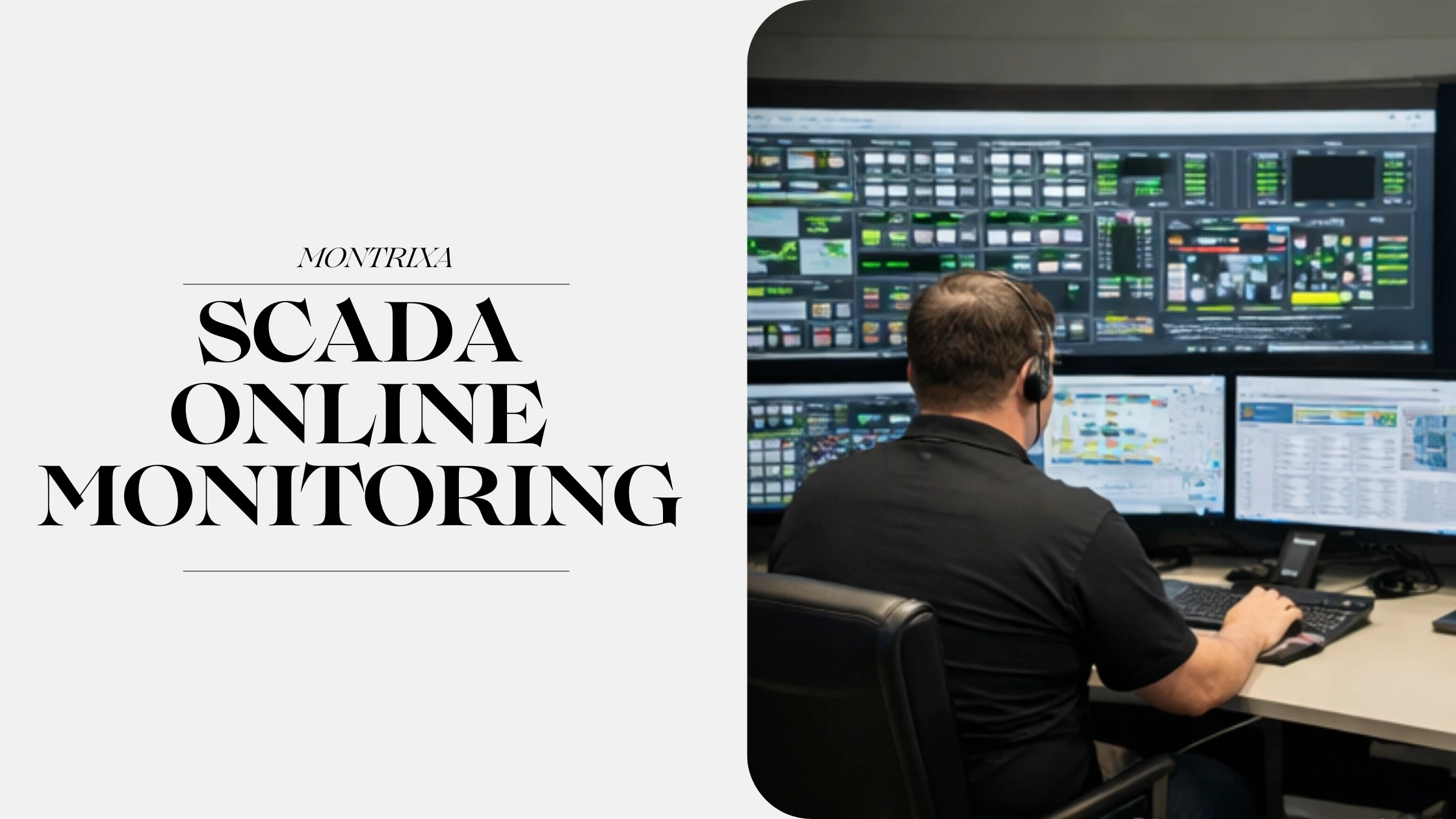
SCADA online monitoring is the continuous supervision and control of industrial processes through networked digital systems. It connects physical equipment with centralized intelligence. Sensors collect operational data. Controllers process it. Operators receive real-time visibility and control. However, the purpose is not observation alone; the purpose is certainty. Moreover, every operational decision relies on verified system conditions. SCADA ensures those conditions are always visible. It replaces assumptions with facts and delays with instant feedback.
Why has online SCADA monitoring become a structural requirement?
Industrial environments are no longer isolated, assets are distributed, and the processes are interconnected. Therefore, downtime propagates quickly across systems. So without SCADA real-time monitoring
- Failures are detected too late
- Response time increases
- Optimization remains theoretical
But the SCADA online monitoring solves these limitations by maintaining continuous situational awareness. Operators see deviations as they form. Control actions are executed without physical intervention. Additionally, performance trends are documented automatically.
SCADA Online Monitoring vs Traditional Monitoring Systems
The main difference between tradition vs SCADA online monitoring are
In Traditional Monitoring
- Periodic data collection
- Limited visibility
- Minimal automation
- Manual response dependency
In SCADA Online Monitoring
- Continuous live data
- Centralized control
- Automated alerts
- Remote command execution
- Historical intelligence
How Does SCADA Online Monitoring Work in Practice?
A SCADA monitoring system begins at the field level. Sensors measure physical parameters such as pressure, temperature, flow, voltage, current, and vibration. These signals are transmitted to PLCs or RTUs, which preprocess and forward the data. Communication networks carry this data to centralized servers, and the SCADA software aggregates, validates, and contextualizes incoming signals. However, the operators interact through human-machine interfaces, and the dashboards present live values, trends, alarms, and system states. The commands are issued directly to field devices. All actions are logged, and the system operates continuously.
- No polling delays
- No blind intervals
Core Capabilities of a Modern SCADA Monitoring Platform
Real-Time Data Acquisition
- Sensors continuously collect values such as pressure, temperature, voltage, flow rate, and vibration.
- Data transmission occurs without interruption.
- Operators see conditions as they exist, not as they were.
Centralized Visualization via HMI
- Human-machine interfaces convert raw signals into structured dashboards.
- Trends become visible.
- Anomalies become obvious.
- Complex systems become manageable.
Remote Supervisory Control
- Authorized users can issue commands from centralized or remote locations.
- Equipment does not require physical presence for routine intervention.
- Response time is reduced significantly.
Alarm Management and Event Logging
- Threshold breaches trigger immediate alerts.
- Events are time-stamped and archived.
- Root cause analysis becomes evidence-based rather than speculative.
Historical Data and Performance Analytics
- Operational history is preserved.
- Patterns are identified.
- Performance benchmarks become measurable and repeatable.
Industry Applications where SCADA Online Monitoring Is Non-Negotiable
In power generation and substations, SCADA stabilizes load distribution and isolates faults. System integrity depends on real-time voltage and frequency monitoring.
Water and wastewater treatment, continuous monitoring ensures consistent quality, controlled dosing, and regulatory compliance.
In oil and gas pipelines, SCADA detects pressure anomalies and flow inconsistencies before environmental damage occurs.
Manufacturing, it maintains production continuity, quality consistency, and equipment health.
Building automation, it optimizes energy usage and environmental comfort while reducing operational waste.
In short, the role remains consistent with SCADA Online monitoring across industries, such as visibility, control, and reliability.
Why does SCADA online monitoring service align with Montrixa?
For Montrixa, SCADA is not software alone. It is an operational intelligence layer that enables
- Continuous asset visibility
- Faster fault response
- Data-driven maintenance planning
- Reduced operational risk
- Measurable performance improvement
This approach supports long-term reliability rather than short-term fixes.
FAQ’s
What’s the difference between SCADA and traditional monitoring systems?
SCADA is more than basic monitoring. It provides interactive control, historical data logging, alarm management, and remote command execution. Traditional systems may only display data without control capabilities.
Can SCADA systems operate over the internet securely?
Yes, SCADA systems can operate securely over the internet when they are designed with industrial-grade security architecture. Secure deployments rely on encrypted communication protocols to protect data in transit, preventing interception. Encrypted channels, VPNs, and strict access controls are commonly used to create isolated, authenticated tunnels between remote assets and control centers.
Is cloud-based SCADA reliable for industrial control?
Yes, but hybrid models are preferred because in these models time-critical control remains local. Analytics and reporting extend to the cloud.
Does SCADA replace skilled operators?
No, SCADA systems do not replace skilled operators. They enhance their effectiveness. SCADA provides real-time visibility, automated alerts, and structured data, but interpretation and decision-making remain human responsibilities. Skilled operators apply experience, judgment, and contextual understanding to respond appropriately to system conditions.
Conclusion
SCADA online monitoring establishes control where complexity exists. It replaces uncertainty with visibility and reaction with planning. The industries that depend on continuous operation cannot afford blind intervals So, SCADA helps them. By making systems observable, processes predictable, and operations resilient. So that is the value of SCADA online monitoring services when implemented correctly. Contact us NOW! For real-time SCADA monitoring